Anyone who’s ever shared their home with a rabbit will understand the old fable of the tortoise and the hare better than most. All of my bunnies are perfect examples of the hare (unsurprisingly) from Aesop’s fable. Bunnies are, after all, natural born sprinters. They love to zoom around our home at lightening speed…but just for a few minutes, and then it’s time for a rest break.

The tortoise and the hare metaphor obviously has its place in distance running. Anyone who has gone out too fast in a race knows how painful it is (physically and mentally) to burn out and have to slow down drastically. Flying fast and close to the sun is fun…until it’s not all of a sudden.

It struck me yesterday during a run (of all places) that despite my fanciful notion I am like my rabbits (antsy, disliking loud noises, disliking when I have to leave the house sometimes!) I am at my core a tortoise. I don’t want to go fast and burn out. I want the slow, sustainable pace–not just in running but in life.

I think for a lot of our early lives we’re taught to be more like hares than tortoises. In school, the message is really to work as hard as you can, cramming in homework between social obligations and all of the other activities that give meaning to our lives. (The often used term “semester sprint” comes to mind here.) Sprint fast, then take a mid-semester break. Cram for auditions, juries, recitals. Rinse and repeat.

I tried to live this way for a time in my 20s and became severely burned out, trying to balance grad school with a full-time job, practicing, and commuting. My sleep, nutrition, and health overall suffered. I came out of my master’s program jaded…and honestly unhappy. I’m not sure I would make the same decisions again.

I’m not trying to fault higher education here necessarily. You can live like the hare for a time. My point here is that it’s not the way to live a sustainable and happy life. The as a whole needs to stop glamorizing the grind, evangelizing the side hustle, commercializing hobbies.

The thing the pandemic has given me is a sense of space and perspective, as it has for many others. I see gigs posted a lot that I could take…but I don’t know if I want to. I’m in a fortunate enough position to not need an extra few hundred dollars. I find myself questioning whether I really want to be a ringer for a high school show when we’re still in a pandemic just to say I’m a working musician.

I’m honestly not sure where I’m going with this…but it’s struck me that in spite of being a type A personality and a hard worker, I don’t want to be working and grinding all the time any more. Slow and steady is a much happier, more fulfilling choice especially as I age. Here’s to prioritizing what we really want to do as long as we have the privilege.


One of the most influential people in early adult life was (and still is) my undergraduate violin professor. She was an amazingly talented and hard-working woman who left this world far too soon. She inspired me to work very hard in college in positive ways, and helped me to find my voice and self-confidence. I was astounded by all she had accomplished and by a fairly young age and for a time wanted to be just like her when I grew up. I still feel this way in many respects.

You probably see where this is going. Sadly, my professor died after a long illness in early 2020, shortly before the pandemic. It was around the same time my grandmother also passed. I found myself questioning the meaning of life and work quite a bit during this time. At 30 years old, having recently switched careers, and being newly engaged, I felt I was at a crossroads for how I wanted to live the rest of my life.

I was fortunate enough to see my professor a few times while she was in remission. We had lunch once when she was in New York (as she and her husband maintained an apartment here). I remember her tone with regards to work had changed a bit during this time. I distinctly recall her telling me to ensure I took care of myself. She mentioned frankly that stress had played a role in her illness. Now I am not suggesting that living like a hare give her cancer, but if she believed working too hard contributed to getting sick I do too. I don’t want her legacy to become a cautionary tale, because she was a beautiful, complex person that I’m sure I only saw a glimpse of as her student. But she did inspire me to be careful about how I use my energy, and to above all appreciate the beauty in art and life.

I want to be the life-loving, slow burning tortoise who lives well into her 100s.

It’s 2022…meaning it’s been almost 3 years since I started my work in product management.

When I started applying to roles, one of the first pieces of advice I received from a colleague was to get comfortable doing user research. I was told (rightfully so) that 20 minutes with actual target users can sometimes be as valuable as a whole market report or analytics tool. As I started reading more on product management industry standards and frameworks, I found that virtually every one of them drove home it was vital to test with users, preferably early and often. So how do so many product teams end up getting user research wrong, or skipping it altogether?

The case of the Safari search bar

A few weeks ago I saw that my sister-in-law shared a Facebook post that was a little atypical of her–a photo with information on how to reverse a new setting in Safari that was released with iOS 15. She was referring to Apple’s decision to move Safari’s search bar from the top of the browser to the bottom and included a caption “For anyone else that was being driven mad by this” (emphasis mine).

Most of my sister-in-law’s social media posts are photos of her kids and memories with friends and family. My first thought was “Wow…for her to post something like this, she must really care about it!” I took a look at the comments on her post. Among them were:

  • “That was really bugging me!”
  • “was driving me nuts!”
  • “I felt myself calm instantly after it was back on top!”

The bigger picture

The original post my sister-in-law shared had over 40,000 shares and 2,400 positive reactions. And the Facebook user who created the post was far from the only person to be annoyed with Safari’s recent change. I performed a quick Google search and found “fix search bar on bottom” was common enough to be an autofill suggestion.

Many new outlets and blogs published instructions on how to move the search bar in Safari back to its familiar position at the top of the screen. These included non-tech websites like CNBC, Mashable, Yahoo, and Elite Daily. One of the several YouTube videos on the topic had 58,000 views (at the time of writing). Many users seemed downright maddened by the UI change, just like my sister-in-law.

When analytics don’t tell the whole story

Obviously, iOS 15 isn’t the first time Apple has come under scrutiny for changes that are less than friendly to the user. I won’t be the first person to observe that their devices don’t seem built to last through iOS version after version. iPhone users might recall that Apple agreed to pay up to $500 million to settle a class action lawsuit regarding the battery life of their devices, which started to perform worse and worse as the phone aged but couldn’t be replaced without a hefty fee.

The reason I find search bar-gate to be so interesting is that I can see the change making perfect sense if you don’t take into account input from a cross-section of users.

Today’s iPhones have screens between 5.4 and 6.7 inches in height. That’s a far cry from the original iPhone’s 4.5 inches in 2008, when you could argue that mobile internet browsing was in its infancy. I have fairly small hands for an adult and can tell you on my SE2 (one of the 5.4″ models) that it’s often a tad annoying to reach from the bottom to the top of my device screen when web browsing.

I would bet that heatmaps at Apple show a gradual shift to more user activity being completed near the bottom of the screen, perhaps in correlation with the larger size of recent devices. For almost a decade, iOS users have been able to see their “most used” or “favorite” apps at the bottom of the device screen for easy access.

With this in mind, it seems as though having a search bar on the bottom of the screen where it is closer to users’ fingers would be a slam dunk for an improved user experience. Clearly, though, many users feel otherwise, and care enough to post about this change over photos of their kids!

Silicon Valley-esque testing?

My guess is that if the Safari team did test the changes for iOS 15 with users, something in their testing methods was seriously awry. It is rare that I’ve seen, either personally or professionally, such vehement opposition to a proposed UI change.

In thinking about how the process might have gone better, I’m reminded a bit of the HBO sitcom Silicon Valley. In the show, the founding team of startup Pied Piper finds itself in dire commercial straights after releasing a product with groundbreaking middle-out compression technology, but limited application to the everyday user. Pied Piper’s founder is a brilliant engineer who is surprised when his product is unsuccessful. Everyone he knew thought that the software was amazing and would be an instant success! Well, almost everyone. There is a pivotal scene where the founder’s love interest/ venture capitalist (it’s complicated?) admits she just did not understand what the product was for. That’s when the team run their first focus group with non-techies (far too late in the process!) and finds out that the average, tech unsavvy user is completely uninterested in the application.

Safari’s search bar might seen innovative and cool to the tech nerd, but for the rest of us it’s just too far of a leap.

So what?

If you’re like Apple, the clear US market leader in your field, you might be tempted to not care about the average Joe’s user experience. With the virtual monopoly Apple holds it seems like a bit of a leap that they might lose significant revenue over an unfavorable UI change. Some might even argue that it’s the job (pun not intended) of Apple to usher us in to the next generation of mobile browsing experience.

But Samsung, not Apple, is the smartphone market leader outside of the US, and while Apple’s share varies from quarter to quarter they are not immune market challenges like those brought about by the COVID-19 pandemic. Apple are famously expensive but have always given the value proposition of having THE top of the line smartphone. If that’s not the case, why do we pay so much for the iPhone? I’m of the firm opinion that if you don’t put consistent effort into making sure you provide the best user experience in the room (or at least a comparable experience) you might become the next MySpace.

Arguably–and yes, I’m revealing my age here–the social networking site MySpace offered a better user experience than Facebook for tech savvy folks. I distinctly remember being able to write actual HTML code for my MySpace page–you could write a blog, customize the colors and font layout, and even add a music player(!) on your page.

As we know today, ultimately Facebook overtook MySpace, and I can’t help but thinking that the lower technical barrier to entry and user friendliness was at least part of Facebook’s victory. Being on the top today is one thing, but staying on top? You need to listen to your users to do that.

TLDR: Since I’ve posted last the health saga has continued, though fortunately my symptoms have improved and day-to-day I am actually starting to feel much more like myself.

The longer version

I saw my PCP again in January at which time she told me she suspected fibromyalgia and me a referral to a rheumatologist.

The rheumatologist did not seem to think there was much wrong with me (no joint disfigurement, no pain when poking and prodding me in various ways)…but mentioned my symptoms were strange. He didn’t have a diagnosis but ordered an ultrasound…which of course my insurance rejected so I’m not sure there’s anything more we can do there.

I also was able to get into the new endocrinologist (who I really like) after a cancellation. He ordered more blood panels and upped my dose of levothyroxine. He also thought my symptoms were a bit strange, though, and not typically the side effects of thyroid malfunction. Fatigue can very well be caused by an underactive thyroid, but the shortness of breath and inability to exert myself when I used to be very active were unusual. He recommended I make an appointment with a cardiologist–which I did and will see at the end of the month. We also officially ruled out COVID-19 via an antibody test.

Even if the cardiologist declares nothing is wrong with me, I do have (mysteriously) high cholesterol and a very high c-reactive protein count (which is linked to an increased risk of heart attacks).

At this stage my best guess is I had a relapse of mono beginning in October which caused the sinus infections, and then post-viral syndrome from mono resulted in the months of crippling fatigue.

The root cause

Why did I have a mono relapse in October? I strongly believe it was the result of chronic stress throughout the COVID-19 pandemic. My anxiety reached a fever pitch (pun not intended) right after my birthday when my symptoms started. Several members of my family were having various issues at the time and without news of a vaccine (yet!) I started to worry we would be living in isolation for years. And then there were the weeks of election stress, an attempted (yet ineffective) coup, and the growing fear that we would lose 10s of thousands of dollars in deposits if we weren’t able to have our wedding in August (still not sure about this one). Writing it all out, there’s little wonder I became so ill.

I have been very proactively seeking to reduce my stress levels. I haven’t had any alcohol in over a month. I started taking live zoom yoga classes in addition to the videos I already do. And if something (aside from things that are absolutely necessary such as work) stresses me out, I leave it. Nick’s been on board and supportive.

And lo and behold, I am starting to get finally heal. I was able to run without walk breaks for the first time in a long time this week. My mood and energy are much improved. I’m even more productive at work.

I am still far from perfect–for instance, I started to have a panic attack when we walked into a too-crowded store before a snowstorm and had to leave. (I also nearly lost it when a woman stood about 6 inches behind me in line and did not understand when I politely asked her to move to the tape 6-feet behind me….but for real where have people been the last year??) BUT. I am getting better.

This has really opened my eyes to the effects of stress and the mind on the body. I have always know how important a healthy mind is, of course, but now I understand more than ever that’s having (relative) peace of mind is not a luxury. It’s necessary for survival.

I’ve felt like I’m at the end of my rope with health problems lately…so like any millennial I have decided to air my grievances on the internet. 😬

Fair warning to the reader–I do not have a great track record with blogging at ALL. I have tried and failed to keep a blog several times over the years…mostly notably when I created a travel blog for my semester abroad and updated it all of once…while I was still in the U.S. But what I’ve been going through lately has been weird and frustrating and I feel as though 1) writing it down could be therapeutic 2) if I have friends experiencing what I am now or in the future I hope to provide some sort of camaraderie and/or reassurance that they are not alone.

Now, some context is probably helpful here. If you’ve been close to me the past several years you might know I was diagnosed with Hashimoto’s disease (autoimmune hypothyroidism) in 2017 when I was in the middle of marathon training. It derailed me for awhile but once I started taking levothyroxine for a few weeks I felt much, much better. I’ve had a terrible immune system my entire life but after starting the medication for Hashimoto’s I was taking only a fraction of the sick days I used to need. And I felt better overall with more energy and less trouble sleeping.

October 2020

Everything was going pretty well until the end of October 2020, about a week after my 31st birthday. (Ok, I guess relatively well because living in the COVID-19 world hasn’t exactly been a picnic.) Now, this is the beginning of a long story so bear with me while I tell it. A lot is centered around running and fitness because that is my barometer for how I am doing health wise. Prior to late October, I was feeling pretty fit again after an injury-filled summer. On my birthday I ran a half marathon long run for fun (and to celebrate!) two days after a hilly tempo + lifting session. And I felt good doing it!

On the day I consider as the origin of all my symptoms, I was out on a run with Nick when something just felt…well wrong. 2 miles into what should have been an easy paced 6-mile run my breathing felt labored and I was feeling much more fatigued than usual. I chalked it up to an off day…but then the next two days were the same. “Ok,” I thought, “I’m probably a little burned out.” After all this year has been one of the most stressful on record for a lot of us. So I took a week off running.

But when I laced up again a week later I actually felt worse. I felt very short of breath and my chest hurt. I cut it short (after about a mile) but my chest pain and shortness of breath persisted. I felt like I had a dumbbell sitting on my chest. I got a COVID test (because I considered these to be symptoms) that came back negative.

November 2020

Around this time I also started to experience sinus pain and headaches. After a few more days I was getting worse, so I went to urgent care and was prescribed antibiotics for a sinus infection. A diagnosis, finally (but I don’t think it was correct).

After 10 days and 20 pills of 975 mg amoxicillin/ clavulin I felt the same and scheduled an appointment with my PCP. I should also mention I was experiencing extreme fatigue at this time (mid-November now). I was barely able to run–if I did my heart rate was much higher than usual and my pace much slower. The shortness of breath and chest pain persisted whether I was running or not. I wondered if I had mono or something like it. I had a lot of “trying a mile and then stopping because it doesn’t feel good at all” days. I got a second COVID test, which again was negative.

My doctor ran an EKG (which was normal) and listened to my lungs (also normal). At this point my primary complaint was extreme, debilitating fatigue. My doctor thought I still had sinusitis and prescribed a second round of antibiotics. She also did some blood work but did not check a lot of things that could be causing my fatigue (like iron, Vitamin D, B12)–which frustrated me.

My sinus pain was about the same after the second round of antibiotics. Since I wasn’t feeling better, I called my doctor’s office and they told me to set up a virtual visit. At this time, my doctor lectured me about my high cholesterol, which honestly puzzled me since 1) I was there for sinus pain, 2) I’d never received access to the recent blood tests and therefore had no idea I suddenly had high cholesterol, and 3) HOW did I have high cholesterol? I am a runner and have been vegan since shortly after college. My doctor seemed to question if I was actually vegan and told me to stop eggs and dairy…which again I haven’t eaten in many years. She said something like…”oh it must just be genetics then. It’s not that high.” Ok… so maybe this is a standard response, but it frustrated me as the either the assumption was just that I am lazy/ eat poorly OR that there was something more serious going on that needed to be investigated and wasn’t.

As for my sinus pain she really had no advice other than “wait a bit longer and if it still hurts we’ll put you on a third round of antibiotics.” At this point I was really frustrated, since antibiotics did not seem to help whatever I had in the first place. The Netipot was my only relief even though using it scared me a bit; I had read more than one story about people dying after using a Netipot that had not been cleaned thoroughly enough.

Nevertheless, I did start to feel a little better after more rest. I was able to start running again and ran 4 miles on an unseasonably warm Thanksgiving…then 6.5 more on the following Saturday. I was feeling like I might have turned a corner.

December 2020

I was continuing to feel better into December, minus some one day where I had neuralgia, and then some glute pain which caused me to take a few days off running and lifting.

That came to a screeching halt right after Christmas when I went for a run and felt much the same as I had that week in October. I chalked it up to the stress of traveling to my parents’ house during COVID and running on snowy trails. I decided to scale back, but since then I have only felt worse.

January 2021, Part 1

I had one ok (albeit very slow) 3- mile run the Saturday after New Year’s Day. But then the following Tuesday I tried to run and could barely jog much slower than my usual easy pace for a few minutes at a time. For my New Year’s resolution, I vowed to figure out what was causing my health problems and to look for a new PCP who would take me more seriously. So far, though, none of the offices I have called have responded to my voicemails (even though their websites say they are taking new patients). It’s been incredibly stressful because at this state my gut tells me I need to get a second opinion.

I saw my doctor again and she was of minimal help. I mentioned I was extremely fatigued all of the time and could barely complete my usual tasks. Running was impossible for more than a few slow minutes at a time even though I’ve completed multiple long distance races over the past few years and had been running long as recently as mid-October. She actually asked “maybe you are just out of shape because you haven’t been working out during the pandemic?” I was furious…because prior to late October I was 100% keeping up with a regular routine! And I had been complaining about an inability to exercise normally during my last two visits. It felt like she was accusing me of being lazy. And if you know me, you know it’s hard to get me to stop exercising even when I need to rest. I cried on my drive home.

But I did get additional blood tests and a referral to a new endocrinologist which I needed. (I was also wondering if any of my illness could be attributed to my thyroid or possibly another undiagnosed autoimmune condition–as they sometimes like to show up in groups.) I set up an appointment with the new endo for April (earliest availability…yes it’s a pain) and am on a wait list for a cancellation. I’m only guessing at whether that might help since my TSH has been only minimally elevated (2.7-ish when my endo said it should be around 1) and my T3 and T4 are in a normal range. For context when I was first diagnosed with Hashimoto’s my TSH was around 7.0…and I honestly felt much better then.

January 2021, Part 2

I got the results back from my second round of blood work. My thyroid levels were the same but a few things that were previously not tested showed up out of range. My iron (total and % saturated only…frustratingly there was no ferritin tested) was very low. My hemoglobin was within range but lower than the last test in November. And my c reactive protein level was 9.9 when the normal range was 0-3. According to Dr. Google (granted, I know this isn’t the best source!) this is a generic marker for inflammation. Levels of 10+ are associated with serious infections or heart attacks (scary, but I don’t know what that means exactly).

I also had high lgG antibodies for Cytomegalovirus (3.4, normal is 0-3.0) and Epstein-Barr (the virus the causes mono). My EBV lgG was ABOVE 750 when the reference range was 0-18. Does this mean I had mono all along?

I should mention that there was never any call from my doctor at this stage, and I had to call the office to remind them to send me my results as they have a bad habit of never uploading them.

So… I had mono (maybe?) and seemed like I was borderline iron-deficient anemic. But how when I already take iron supplements?

January 2021, Part 3

Without any real guidance from my doctor other than the generic “it’s good to be active” I continued to exercise as my body allowed at a much lower than usual intensity. I downloaded the Peloton app and was doing weightlifting classes and treadmill boot camps (which are largely effort-based and combine treadmill intervals with exercising off the treadmill–I figure they could be a good reintroduction to running). I listened to my body and would take a break when I needed. And I didn’t skip rest days either.

On Tuesday the 12th I tried to run but honestly was slogging along at the slowest pace I have ever recorded and not feeling good doing it. So it called it quits very early. After I got home I decided to completely rest until at least the end of the week.

I also noticed that my left shoulder was starting to hurt, particularly when I breathed in. It was bearable, but I couldn’t sleep on that side without pain. It seemed to improve with rest.

January 2021, Part 4

In the middle of the night on Thursday the 14th I woke up in severe pain. My entire left side from the bottom of my rib cage to the ripe of my shoulder was on fire. Breathing in was difficult, especially deeply. I took 2 Advil (400 mgs in total), then 2 more 40 minutes later when it seemed to do nothing. I was crying and groaning trying to go back to asleep. Every position hurt–lying on both sides and my back, even sitting up.

Nick eventually woke up and asked if I wanted to go to the ER. I was afraid because COVID rates were on the rise in our county and I did not want to be exposed. We decided to wait a half hour and see if it improved.

Eventually I was able to sleep a little. We decided I would go to urgent care in the morning. (But I probably should have just gone to the ER, given that I was no closer to answers after my visit.)

I specifically chose a clinic not treating COVID patients nor running COVID tests to avoid exposure. But when I arrived I waited two hours to be seen, then three more hours while they ran some tests. I remember laying on the patient bed and praying they would figure out what was wrong. They ran a chest X-ray and urine test (both were normal) and eventually advised I just take 800mgs ibuprofen alternating with acetaminophen.

I drove home in tears no longer feeling like I no longer owned my own body.

Now?

I talked to my sister (a dentist) that evening. We were wondering if maybe the pain was from an enlarged spleen due to mono. I cursed myself for not mentioning the possibility during the urgent care visit (honestly I was just in so much pain then!) and decided to go to the ER if I got any worse. Fortunately taking high doses of NSAIDs for a few days has lessened the pain. But I am basically just laying on the couch unable to do much else. I have a follow up appointment with my PCP this week. Honestly I just want answers.

If you’ve gotten this far, thanks for reading. I will continue to post updates here as I am working hard to find out what’s wrong. I’ve gone from being a very healthy and active 31-year-old to a woman who has trouble staying awake at her computer after sleeping 10+ hours. My life feels a bit like a TLC medical reality show. If I don’t have mono I am beginning to suspect something quite sinister might be going on and it’s truly frustrating that my doctor has been dismissing how I feel and/or not taking my symptoms seriously.

I understand that the COVID-19 pandemic has caused additional stress on everyone, especially medical professionals. But to have my doctor imply multiple times that maybe I’m just lazy or need to clean up my lifestyle when I am extremely active and eat very well is not ok. And neither are the doctors who claim to be taking new patients only to never respond to my inquiries. Part of this may be due to my insurance being bad and not having many doctors in network…but at this stage I am quite honestly willing to pay to figure out what’s wrong and start getting better. Health is wealth after all.
Living in NYC and not being a billionaire is, well, a challenge! I’ve been out of college for 6.5 years now and my savings account is…let’s say minimal. Part of that is the high cost of rent, student loan payments, the mark-up we have on basically everything….but another SIGNIFICANT portion of my budget? Healthcare-related expenses.

Now, I’ll start by saying that I do have a few underlying health conditions. I receive treatment for mental health conditions and Hashimoto’s disease. But otherwise I consider myself a VERY healthy person.

I could also honestly save money by buying crap-for-you frozen dinners instead of vegetables, and cancel my gym membership…but I’m not going to do either of those things because they’re not healthy for me. And after I was horribly unhealthy for a few years during my time in grad school I’m just not going to compromise my health again. (Sidebar: to all those people who say you can exercise at home instead of going to the gym…yes that’s technically true…but I lift heavy, and honestly buying all the equipment I use would be FAR more expensive than paying for the gym!)

Like a good girl, I am attempting to review my expenses from the year and make a budget for the next one (slightly depressing, but necessary because I live in NYC). And the amount I’ve spent on health care is frankly SHOCKING. Over $2,000 after tax on healthcare…and that’s NOT including my monthly premiums (about $100) nor prescriptions (~$40-50 per month). So that 2K is solely on copays and office fees not covered by insurance.

Before I go further, let me say I am a big supporter of the Universal Healthcare Act (Obamacare). I believe every American citizen has the right to health coverage. But I don’t think it went nearly far enough. (Semi-sidebar: I do think as a result of a Obamacare a whole lot of right-leaning insurance execs wanted to say f*** you and made coverage a whole lot worse for a lot of us….it’s unfortunate, but in this country healthcare is a business….and to be honest they always could have done that long before Obamacare).

So, as a runner I do get injured from time to time. And a LOT of my healthcare expenses this past year went towards my calf injury. Why? Because the calf injury, while an overuse injury, was caused by an ankle sprain from my teen years that never healed properly. And that meant physical therapy/ hell to get it better.

(If ANYONE reading this has the ability to NOT choose Cigna for health coverage, please do it. I used to have UnitedHealthcare, and they were far superior both in cost, accessibility, and quality of providers. Your employer might offer a better plan than mine but I found it almost impossible to get anything covered under Cigna’s laborious “review” process.Β )

When you’re injured, often a first step is radiology (including x-rays, MRIs, etc.) but that’s only covered by coinsurance under my plan… So if you want to role out a broken bone, you need to shell out $75 minimum unless you’ve already met the 1K deductible…and then you only need to pay like $50 because coinsurance sucks.

I had to role out a blood clot with my injury…which was about as fun as it sounds. Yay ultrasound…I actually went to the ER for that on purpose. Because the $250 ER copay was far less than actually getting a radiology referral and paying out of pocket…

That brings me to the physical therapy coverage which is just terrible. I had previous PT for a labral tear (UnitedHealthcare) and it was a breeze compared to my calf injury (which was actually less serious). $15 a visit and I was able to go as many times as the PT recommended (ended up being like 20 times, twice a week for 10 weeks).

In contrast, with Cigna I was only allowed 6 visits (at first) at $50 a pop…had to go a PT far away…and had to sometimes wait weeks until I could go back because I needed to get approval. I had to CONTINUOUSLY petition for more visits and would get bogus excuses for them being rejected like “my PT did not evaluate me properly” (they did) or “you’re not getting better fast enough” (what…?) or the real kicker “your provider is using an experimental treatment” (wait…is PHYSICAL THERAPY the experimental treatment???).

AND…with Cigna there were FEWER than 10 in-network PT offices in ALL OF NYC. You read that right.

And absolutely NONE of them had running knowledge. That meant my PT, while helpful and well-intentioned, had to basically guess on when I could run, how much, the intensity, etc. It ended up taking a few months because I was really better because of all the guess work.

I have actually considered looking for a new job because my insurance is so bad….but I honestly ask….would that help? Can you really find the granular details of a company-provided health plan pre-interview, or even during the offer? I don’t even know many friends or family members with decent insurance any more.

That brings me toΒ  now…I am injured again but I really don’t want to go through all that insurance hell. It’s minor enough that I can (hopefully) take a week or two off and be better. I am paying 100% out of pocket to see an ART. But at least I was able to get a Black Friday discount on a package. (America…)

So yeah, I know I’ve rambled a lot. Not quite sure on the point of this post except for the true irony that is Cigna “sponsoring” the Miami Marathon when they make it basically impossible to receive the physical therapy necessary to keep runners/ athletes healthy.

F*** insurance. All the worst is my knowledge that I am coming about this from a point of privilege as a white middle class woman. I can’t imagine having even worse insurance or no disposable funds to spend on healthcare at all.

——–

P.S. I didn’t even discuss the coverage for my other issues. Like my Hashimoto’s. I have to FIGHT with my insurance to get them to cover routine blood work to monitor my thyroid levels. Apparently the doc needs to use a very specific billing code, use only a specific lab, etc. One minor detail goes wrong there and I’m stuck with a huge bill.

There are few endocrinologists in NYC to begin with, and I recently got a letter that mine will no longer be covered by my insurance. So I’m overdue for an appointment and need to find a new one. Womp womp.

P.P.S. Maternity coverage apparently doesn’t exist on my current insurance, or technically it does but it’s so bad it might as well not… Ha. If I got pregnant I would be screwed. Estimated cost of a delivery under this plan: $1500 standard/ $3000 c-section. FOR JUST DELIVERING A CHILD. God, they should pay YOU for that. Prenatal/ postnatal care are also extremely limited. Just getting to birth would make me broke, let alone raising a child.

(Sidebar: My generation gets too much flack about being bad with money….I called my mother to confirm, and under my father’s blue collar job’s health insurance…my parents did not pay a cent for prenatal care nor delivery in the 1980s…and VERY minimal fees while I was hospitalized shortly after birth. Same with my siblings. I, as a middle class woman with a white collar job in 2018, would be severely burdened by the expenses associated with childbirth…and any complications would probably darn near bankrupt me. That’s the reality of the world we live in. And let’s remember this is with the supposedly coveted middle class employer-provided healthcare…I can only assume marketplace plans are worse.)


I’m going to write about something I care about A LOT today–body image, weight, and how it correlates with running.

First off, you should probably know a little bit about my history with my body. It’s not a great one. In college I started to open up about the fact that I had struggled with an eating disorder (anorexia) for many of my pre-teen and teen years. I wrote a piece about it one of my first creative writing classes and was published in my college’s journal (The Mercury–actually fun fact, if you Google me it’s still on the first page of results! Forever a part of my internet identity!).

All jokes aside, living with an eating disorder left a very real and lasting mental and physical impact on me. The most obvious one is on my height. I’ve reached my adult height (just shy of 5’2″) at age 11-12 because I restricted myself to a SEVERE low calorie diet–we’re talking like 500 calories a day here–for months and months at a time. I was so food deprived that I looked forward to–nay, fantasized about!–eating a can of green beans. Like, who does that? And yes, I lost my period for a long time (my first menses came at age 10)–which does mildly concern me that I’ll have trouble having children someday if I choose, but hopefully not.

Besides being a shorter than expected human–yes, I firmly believe my genes say I should be taller since my mom is 5’10” and my sister 5’6″–my metabolism was screwed up for years. When I got to college and started eating campus food my waistline ballooned. Ok, yep, I did have beer too but based what I was eating I really should not have gained as much weight as I did my freshy year. I believe it took a few years for my metabolism to “self-correct” once I started eating more normally.

And all this is not to mention the warped perception I had of my body for years, and still have to some extent.

So, how does running fit in with all this? When I was a kid I saw exercise as a means to an end (weight loss). And that blew up disastrously for me because it gave me a bad relationship with running. I ended up doing 2 years of middle school track, once in 7th grade and once in 9th grade, in part because I thought it would make me thinner. I didn’t eat enough to fuel my workouts, and I wasn’t very fast. But I didn’t get any thinner so I said f*** it–if I’m not any good and this is not helping the way I look I would be better off focusing on my music. So I did. And that was fine. And at that time I had no idea that if I trained year-round in a responsible manner I would eventually improve, but that’s another story.

When I was 26 years old I was arguably in the worst health of my life. I slept very little as I was working full time and going to grad school for music. I skipped meals. I ate most of my meals out. And I was super inactive. I knew I needed to make a change so I started running in earnest. And this time I fell IN LOVE with it.

Fast forward to fall 2016 when I ran my first half marathon. I’d never loved my body more for giving me the strength to run 13.1 miles without stopping. I started to learn to care less what my body looked like and more what it could do. Running gave me such a gift in showing me to love and respect my body. As I met more runners I learned that a lot of them had a similar experience when they found long distance running.

But eating disorders and poor body image are also rampant in the running community. This is a complicated issue, but at the heart of it is the largely outdated, even misguided, idea that being leaner makes you faster.

Talk to any college women’s cross country team and you’ll learn they’re under pressure to look a certain way. They’re told being thinner is the ticket to being faster, even if they end up with stress fractures from being underfueled. Several women–who have later become professional runners, looking at you Allie Kieffer–found that out of college when they stopped obsessing over the number on the scale and more on eating healthy, they got faster and stronger than they even imagined.

Ask any normal looking woman how many times she’s been told she “doesn’t look like a runner” because she “isn’t thin enough.” Runners are not immune to the pressure to be thin in spite of doing incredible things with their bodies, and to be frank I’m fed up with it. Being thinner doesn’t make you faster. Training, recovering properly, and living a healthy lifestyle does.

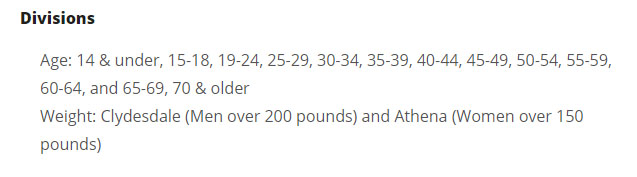
Recently another runner posted a story about seeing the possibility to register–as a recreational runner, mind you–in the “Athena” category at a race for “larger women” over 150 pounds. Yep, 150, lower than the average weight of an American woman.

Doing a little research about this designation, I found that the “Athena” category came about in a seemingly random attempt to make running and triathlon more inclusive. Any recreational runner over 150 can presumably choose to register for this category, regardless of muscle mass, athletic background, age, or even height. Admittedly, I didn’t look that hard but I could not find definitive scientific evidence that being over 150 pounds presents any sort of handicap to a female runner.

Logically speaking, yeah if you have more fat it might be more difficult to run faster, but what if most of your weight is lean muscle mass in your legs? I know that for myself and SO MANY other women, gaining weight just happens when you get fitter because you gain muscle mass. And for taller, buffer women I bet sub-150 could even be unhealthily thin. How many women fear “bulking up” from lifting too much weight? (I know MORE THAN A FEW myself.) And why much stronger could those women be if they just said f*** you, scale?!

AND YET in spite of all this, more and more races seem to be adding weight categories… here’s what I found when looking at the Phoenix Marathon page.

weight

I’m disappointed. If we really want to make the sport of running more inclusive, let’s get rid of the idea that you have to look a certain way or WEIGH a certain number to be strong and faster. Not strong and fast for your weight. Strong and fast period. Every woman (and man) deserves to love their body for what it can do.

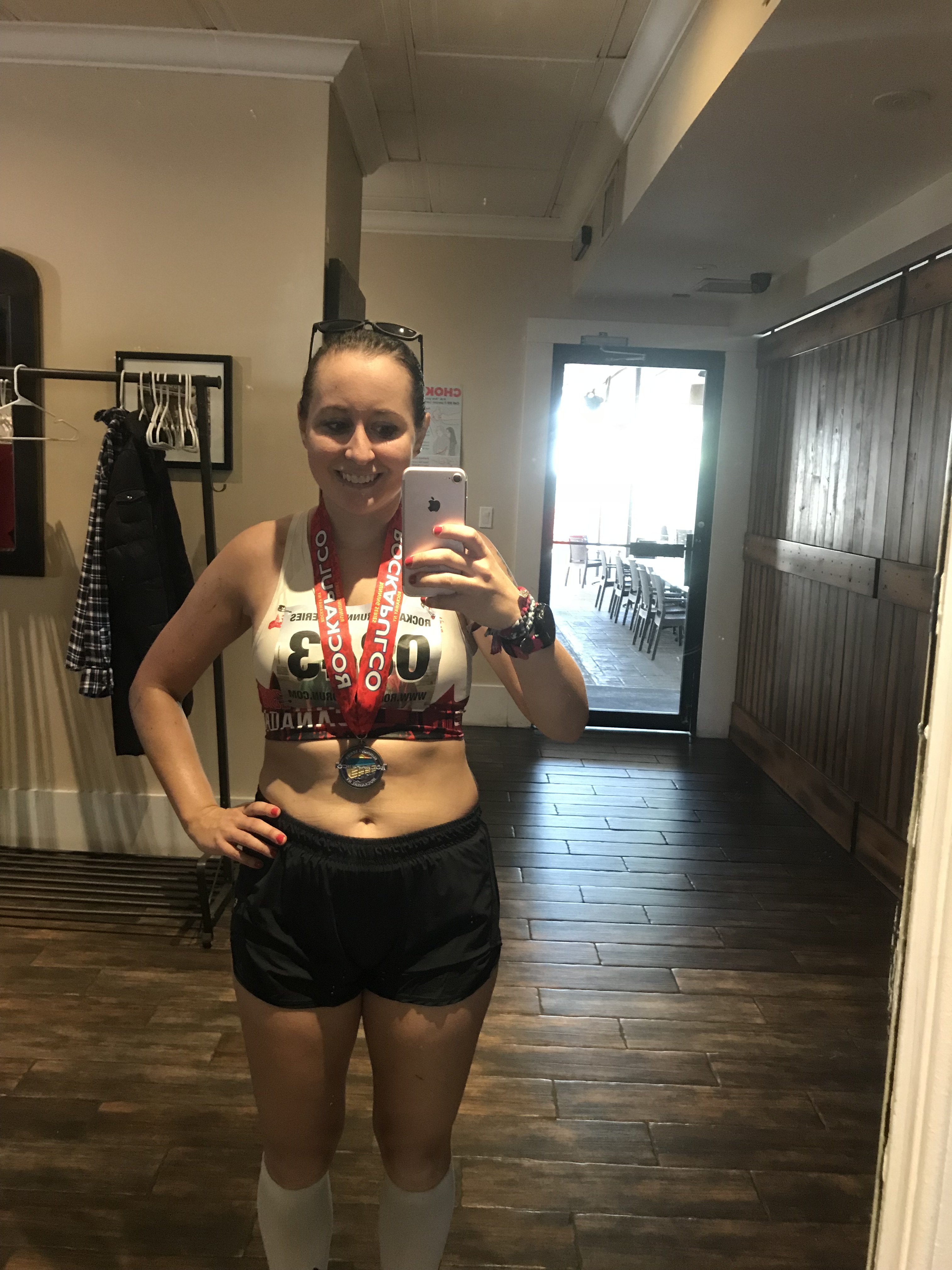
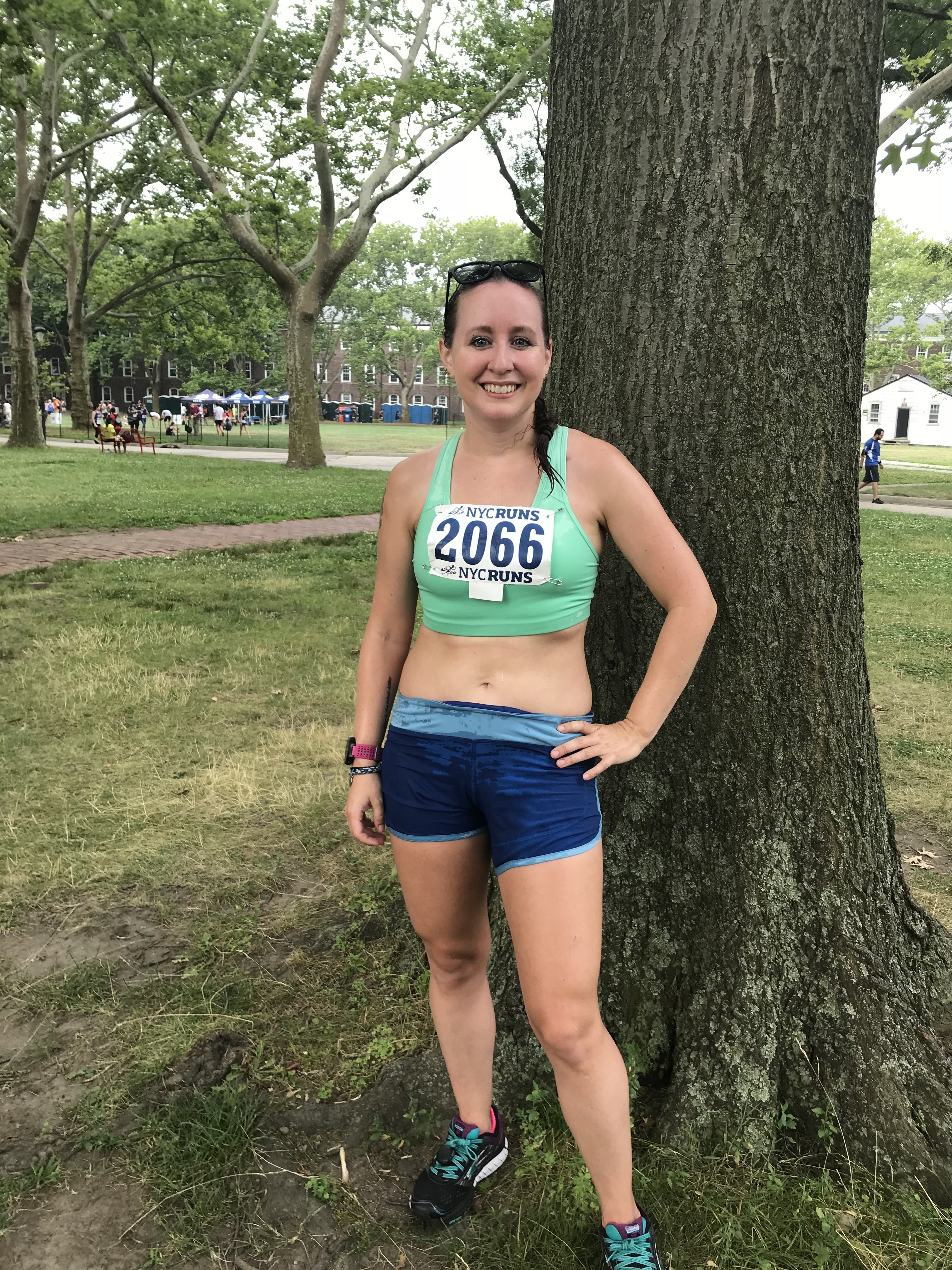
In the spirit of transparency, here are some untouched photos of me after some difficult races. I weigh more than I ever did before but I am also the strongest I’ve ever been.

IMG_5845
About to become a marathoner. I am halfway between crying and smiling for my mom.

IMG_5267
After my half PR race. It was 80 degrees and full sun yet I still managed a 30 second PR. Yeah my stomach isn’t flat but so what?

IMG_5371
After running a July 4th 5K in 85 degrees and 95% humidity. Only a few seconds off my PR.


This blog has been a long time coming. Post-college my life has felt like a bit of a mixed bag. Yeah from the outside I probably looked like I have it all figured out but doesn’t everyone to some degree?

Bottom line–I have a degree in writing (and music, but we’ll get to that) and I haven’t really done too much writing since I stopped freelancing in 2014 to start grad school. So creating this blog is my kick in the pants to get started again! I have no idea if anyone’s going to read this, but sometimes I need to vent or tell a story and social media just isn’t the place to do it. πŸ™‚ (You could say a blog is a form of social media, but I guess I mean social media in the vein of Facebook, Twitter, et al).

I should also start showcasing my music and other skills if I ever want to build up my gigging (again we’ll get to that :)…). So I set myself up with a nice little WP premium account. Investment in myself and all.

So, let’s get started I guess. My birthday was last week (hello 29!), and that always makes me reflect on the state of my life. Frankly, the last year has had a lot of bright spots, even if I am feeling a bit lost right now.

I’m told gratitude lists are good for your mental health (THANK YOU Deena Kastor) so let’s do that.

  1. Most recently I ran a FREAKING MARATHON on September 30. That was a huge goal two years in the making, and I am still enormously proud. I’ll probably even devote a whole post to that at some point.
  2. My boyfriend and I have also been at our current address in Bay Ridge, Brooklyn for over a year now and have 10-ish months left on the new lease. I am so thankful to have a place to live in NYC. Apartment hunting in NYC is literal hell if you’re on a budget so I’m counting that one as a big blessing too.
  3. Our bunnies are hilarious. Expect to see lots of pictures of them here!
  4. My health is pretty good. My Hashimoto’s seems pretty well controlled as does my mental health thanks to running.
  5. I am employed and financially in ok shape for the moment.
  6. I’m starting to get back into running regularly after some down time for marathon recovery.
  7. I’ve officially played through the entire Shostakovich violin concerto even if I haven’t properly learned the whole thing yet.

Yet…

It could be the post-race blues, but lately I’ve been finding myself…well just wanting more without being able to pinpoint exactly what. The Germans probably have some super weird word for this kind of feeling but I haven’t found it yet.

I guess I’ll keep thinking on that. In the meantime, I’ve got to get myself set up with some comfy clothes and tea in preparation for the very rainy weekend we’re going to have.